Indian Wedding Reimagined Through Design, Production, and Intention
February 10, 2026
Indian weddings have long unfolded as multi-day celebrations, but in recent years couples have begun to seek something more curated, more personal, and more attuned to aesthetics. For this Atlanta couple, that vision translated into five distinct events over three days for more than 400 guests, each designed and produced to feel like its own experience. As the planner and creative director, RHS Events approached the weekend with a guiding principle: nothing repeated, nothing derivative, nothing predictable.
The bride’s only mandate was originality. She valued design as deeply as she valued tradition, and she wanted guests to feel the shift in tone, palette, and atmosphere from one event to the next. That request set the framework for a wedding that married cultural heritage with contemporary creative direction, an approach that defines a new chapter for modern Indian weddings.
A Modern Interpretation of Grah Shanti
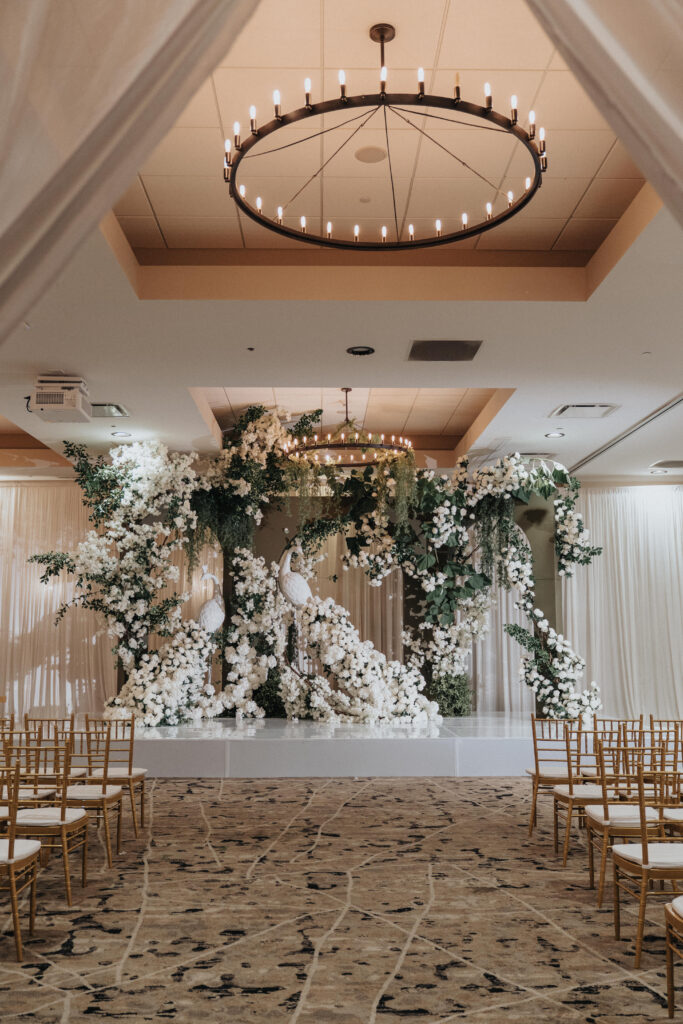
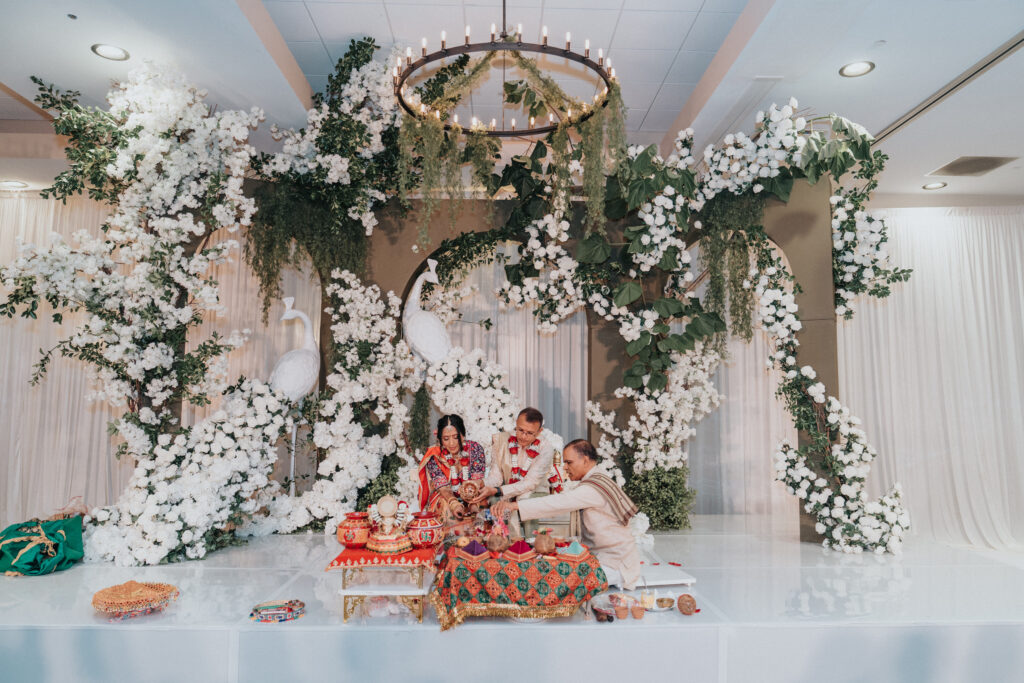
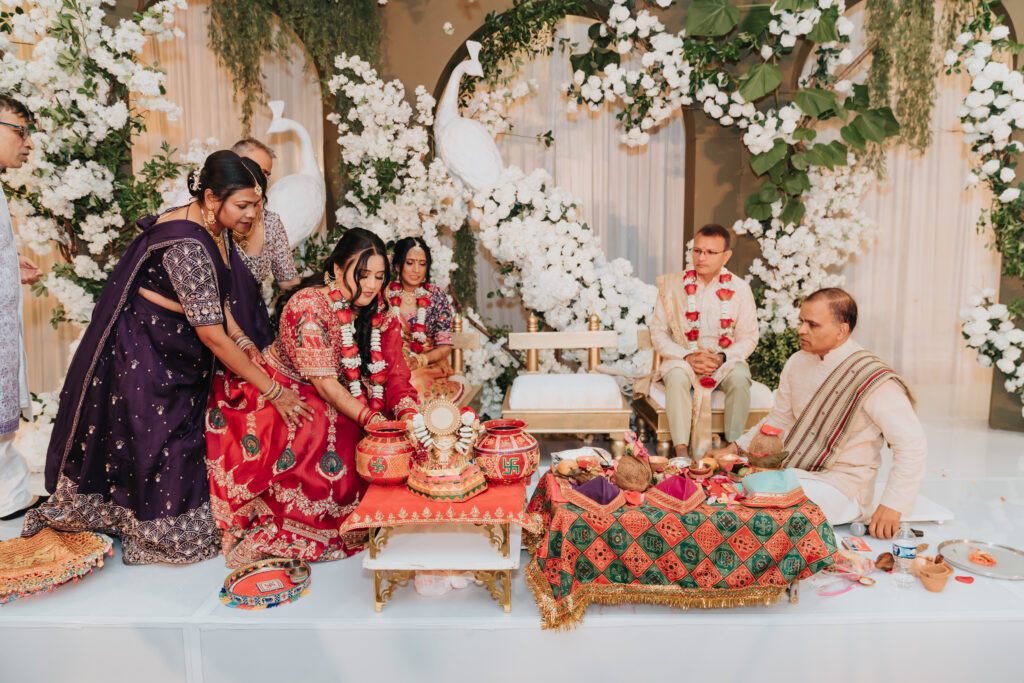
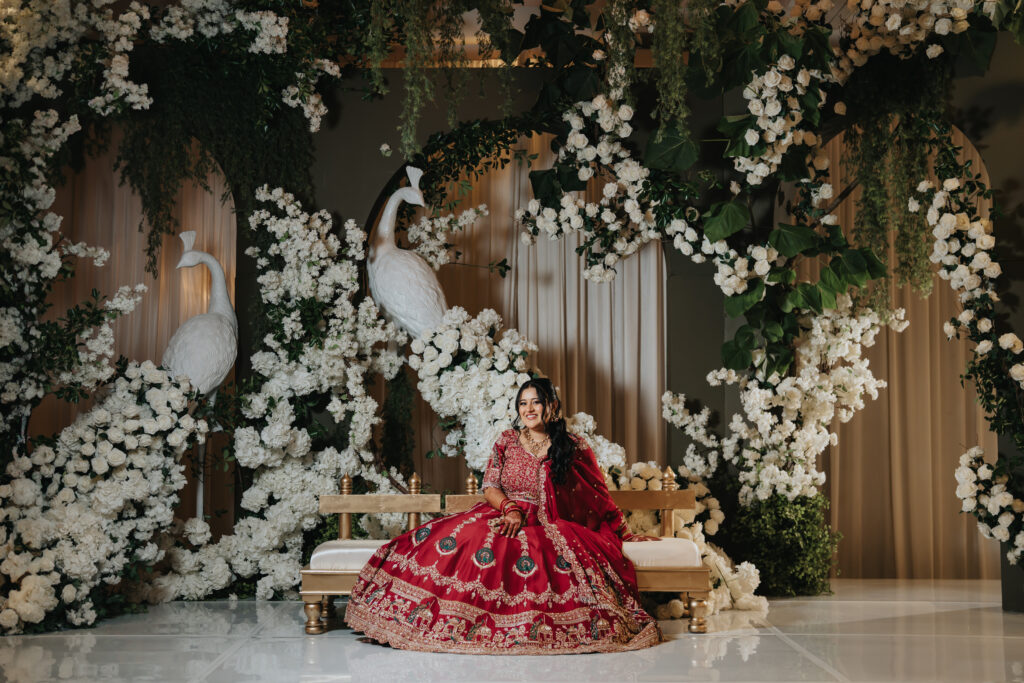
The weekend opened with the Grah Shanti, traditionally an intimate ritual often styled with simple floral elements. For this couple, the event became a study in modern restraint, fluid white florals, fresh green tones, and clean spatial lines replaced the expected marigolds and rustic décor. The aesthetic signaled that this wedding would not rely on convention; it would reinterpret it.
A Color-Forward Sangeet with Cultural Warmth
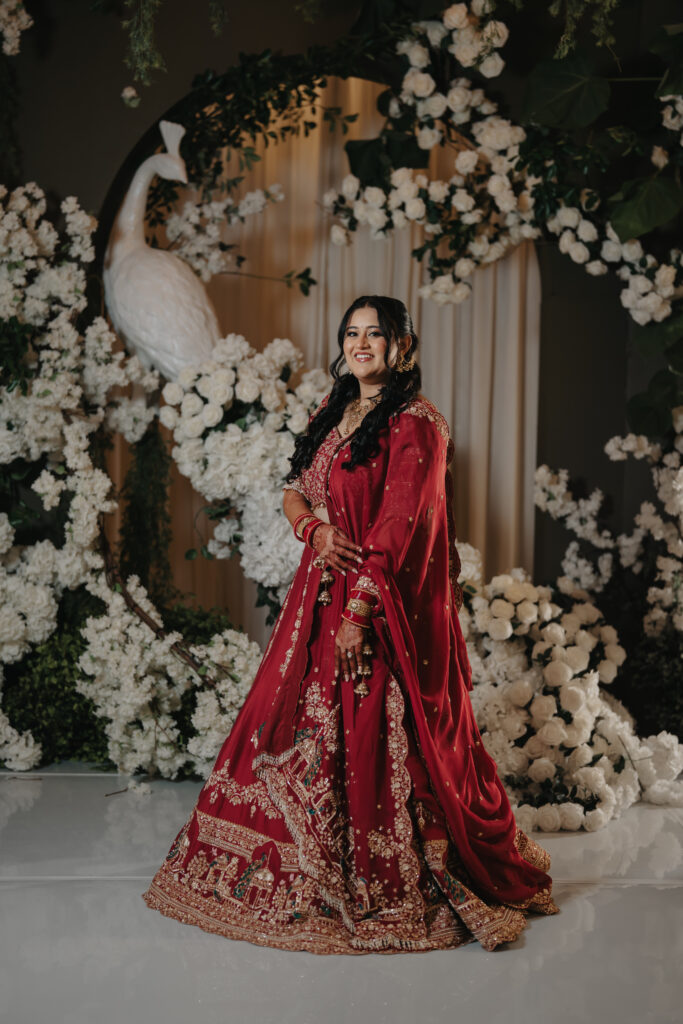
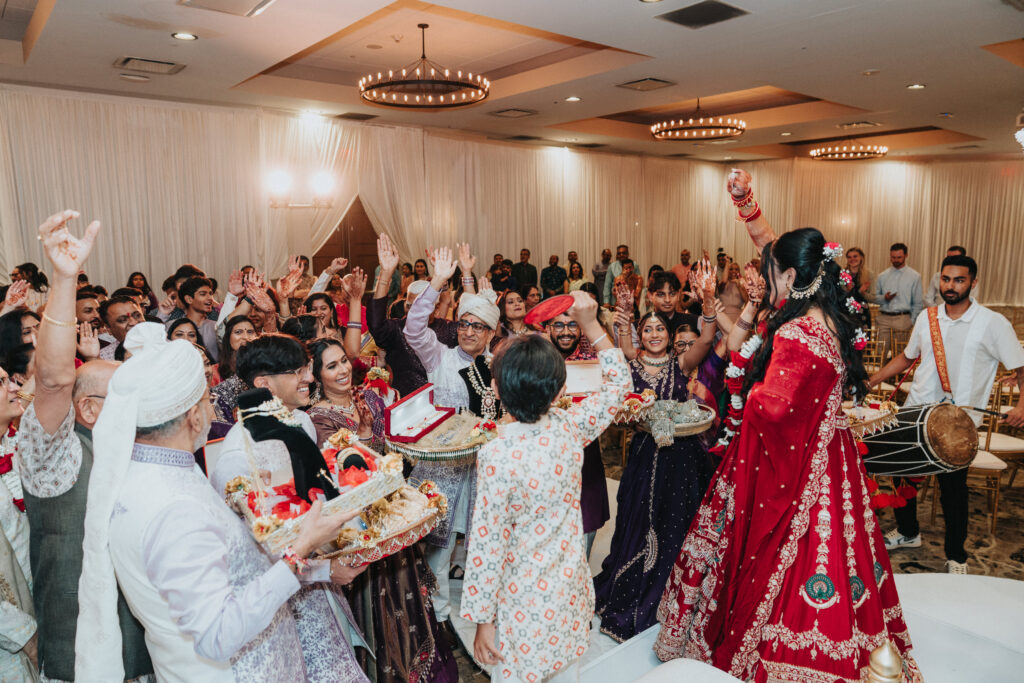
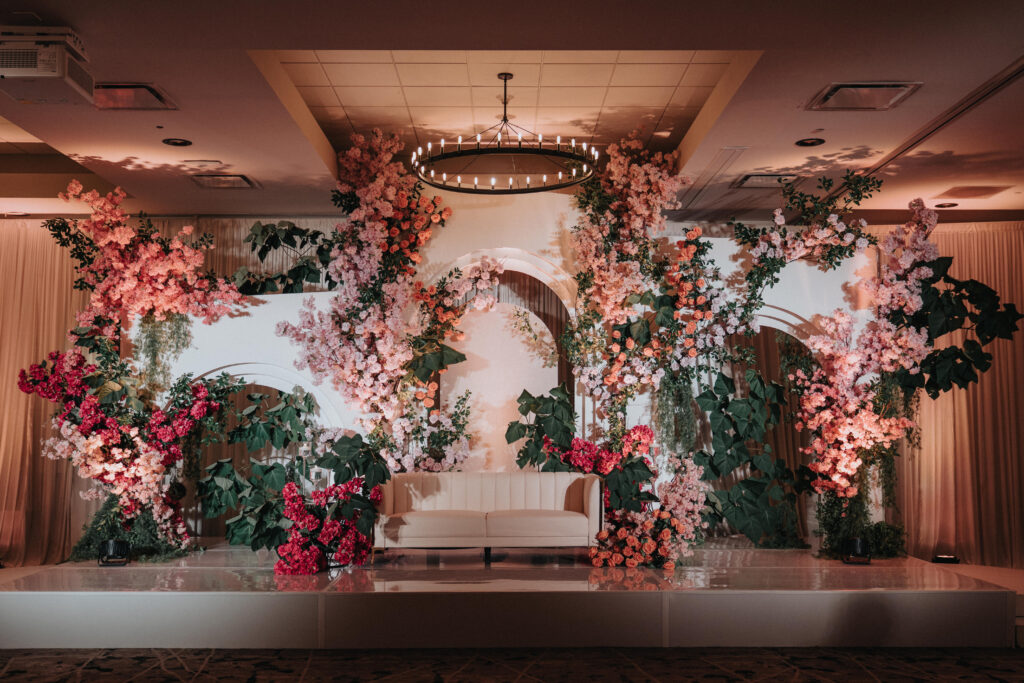
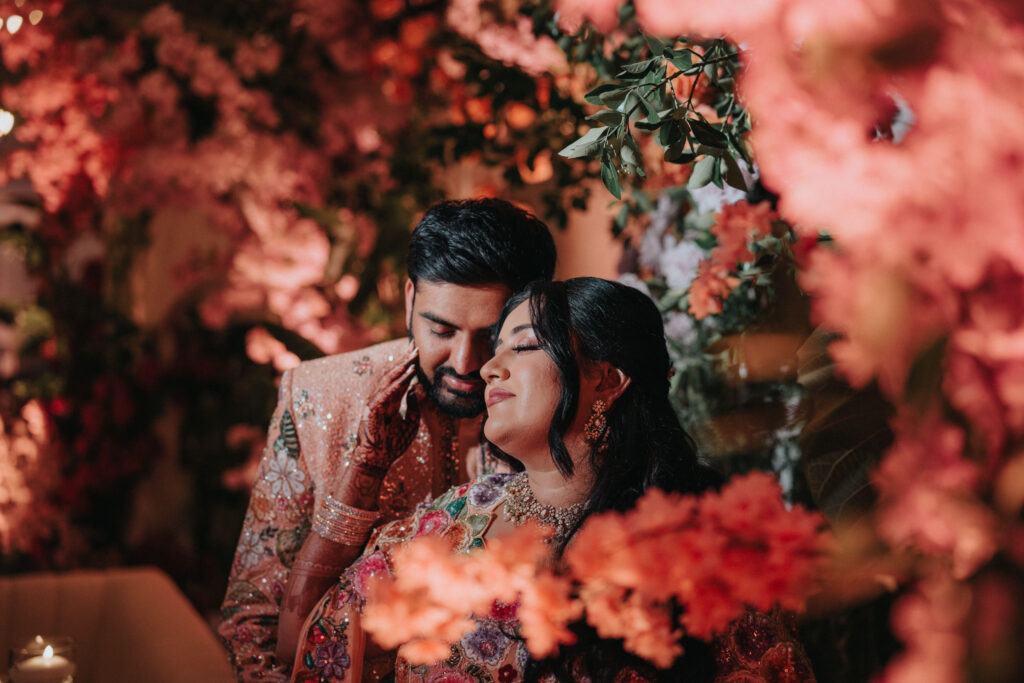
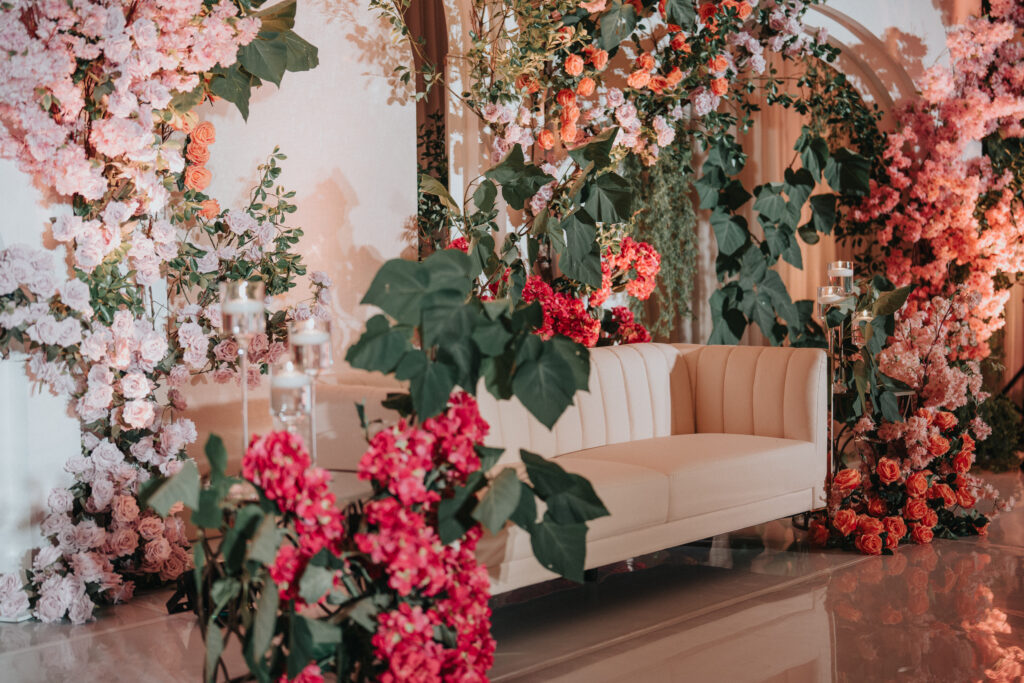
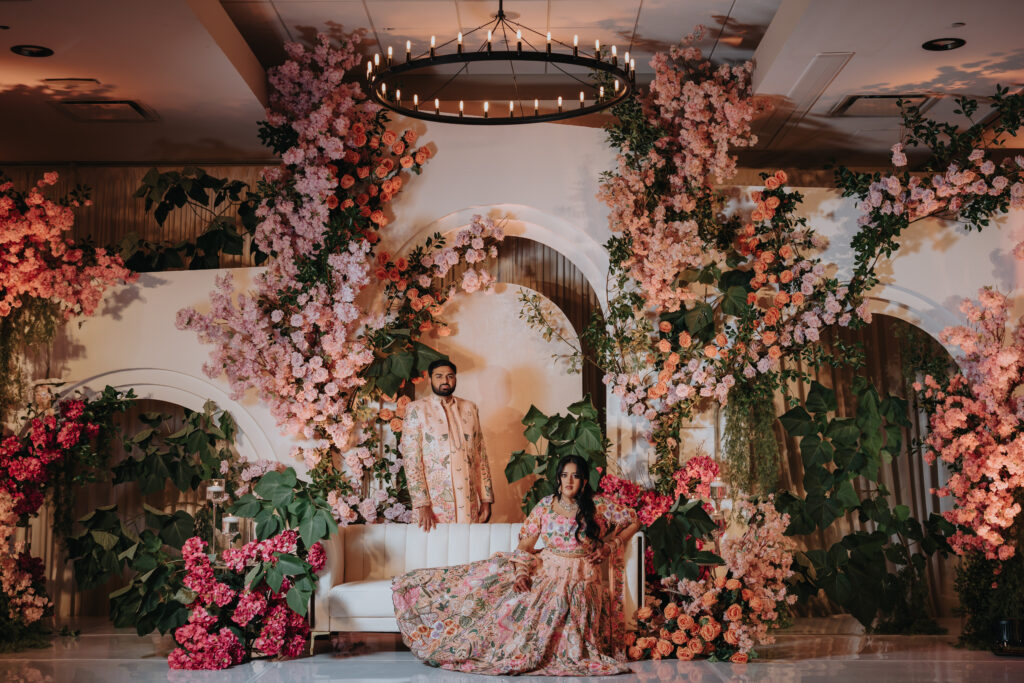
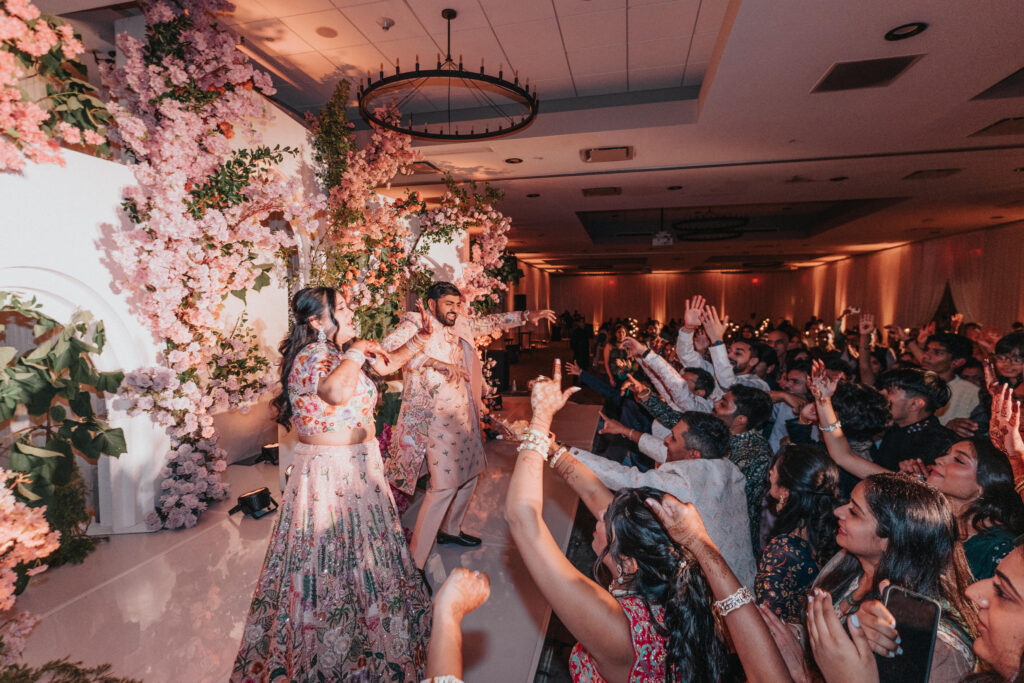
The Sangeet invited color and texture. Instead of leaning into kitsch or overstatement, the palette embraced vibrancy with intention juxtaposing rich tones, textured textiles, and softly gilded accents. Dynamic lighting sculpted the space, creating depth across performance zones and seating clusters. A layered seating plan optimized sightlines and circulation, encouraging movement and interaction while preserving visual coherence and sophistication.
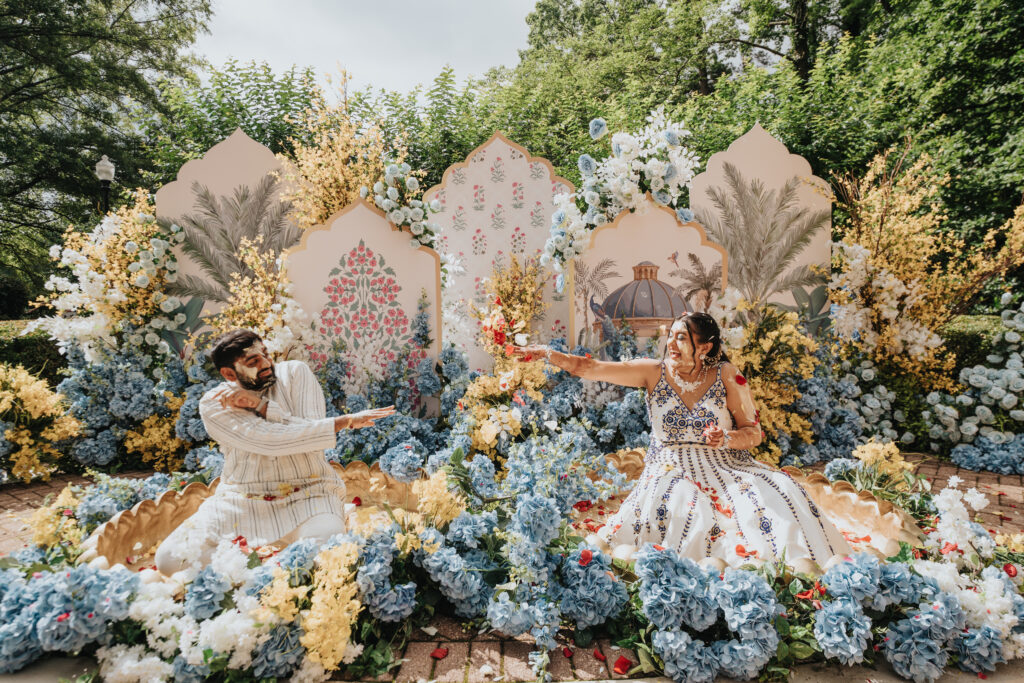
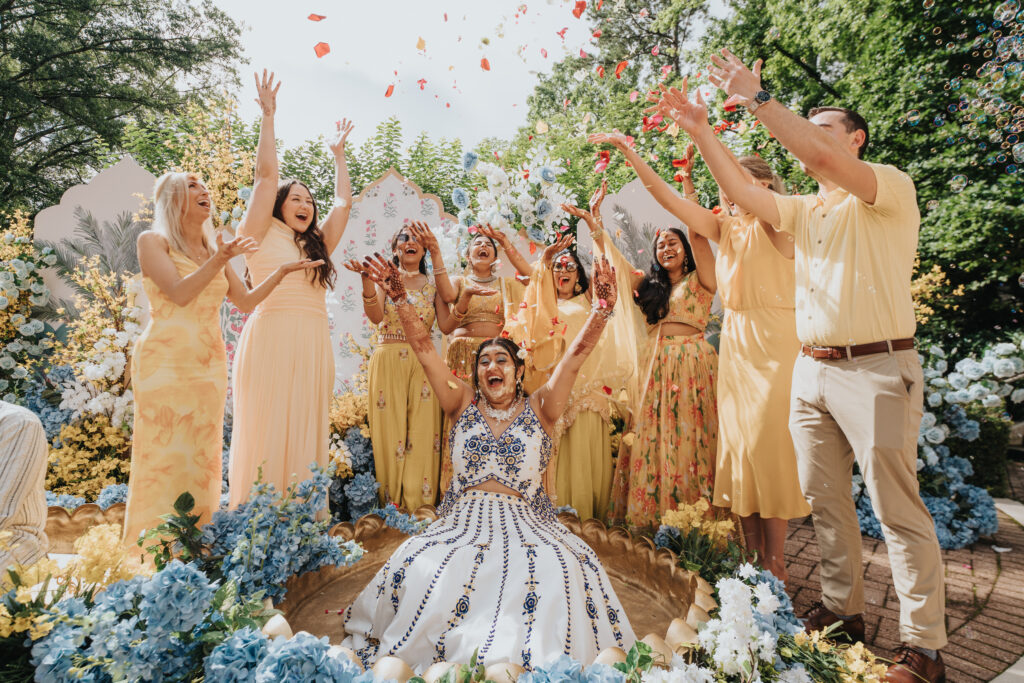
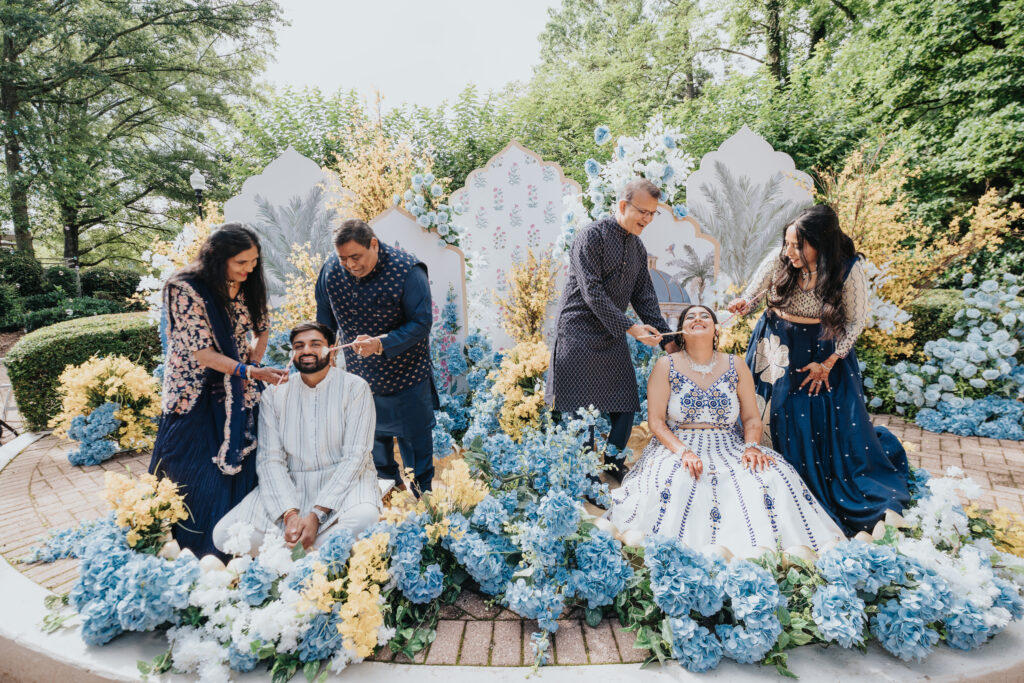
An Outdoor Haldi Defined by Color and Tenacity
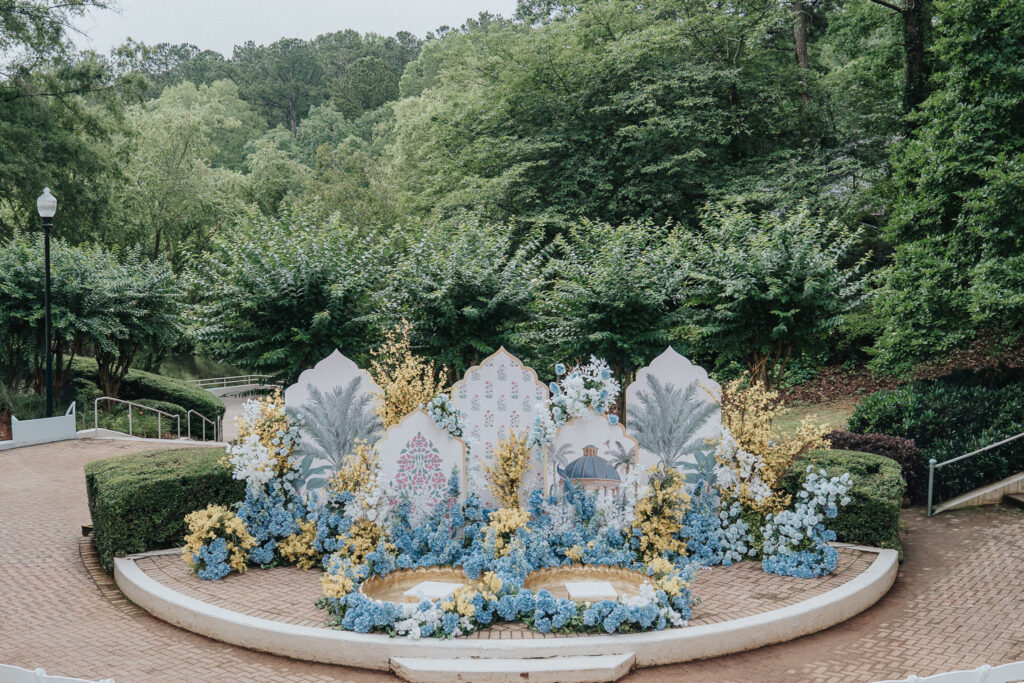
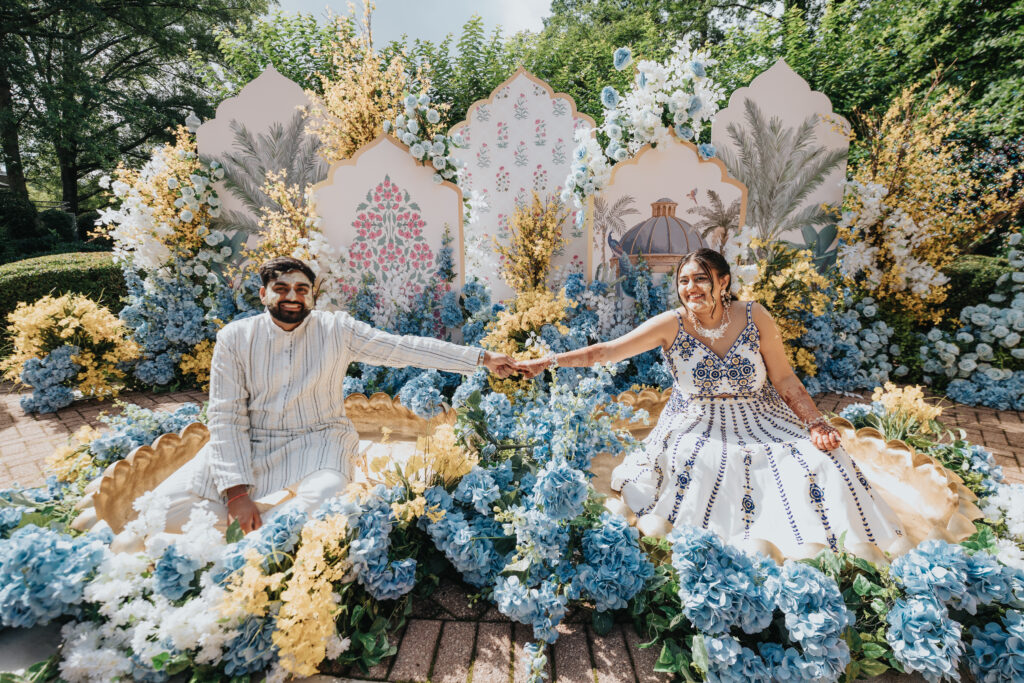
The Haldi was always meant to be outdoors. Rain complicated the plan. The forecast kept changing overnight, so we held the decision until 5:00 AM to protect the bride’s wish unless the weather made it impossible. By 8:00 AM, vendors had set up the full event, proving the power of a collaborative production team aligned around a client’s priorities.
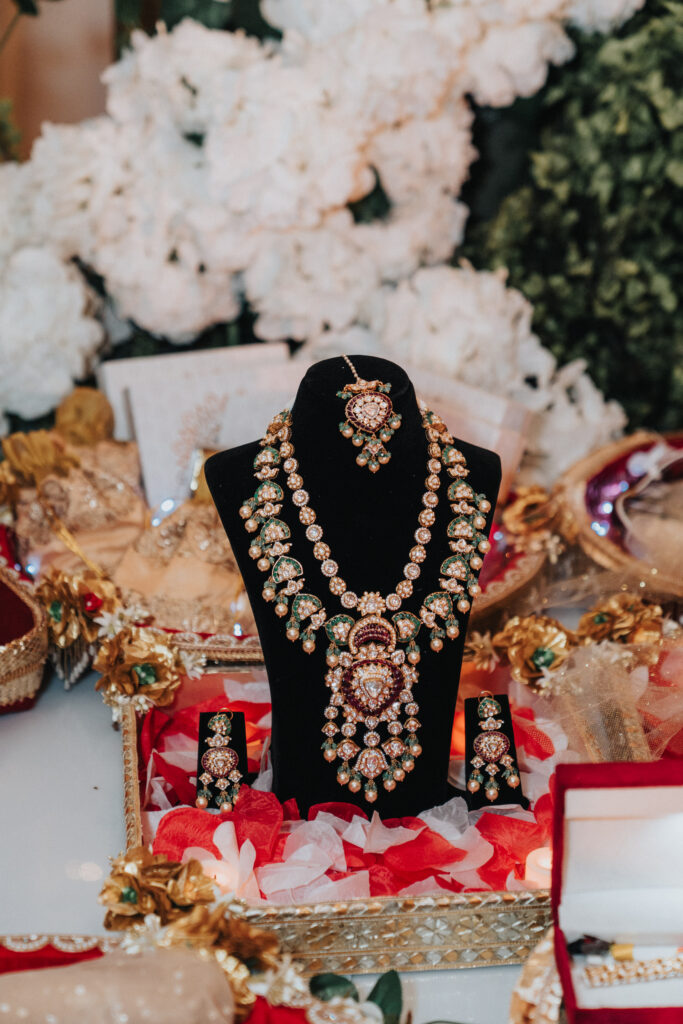
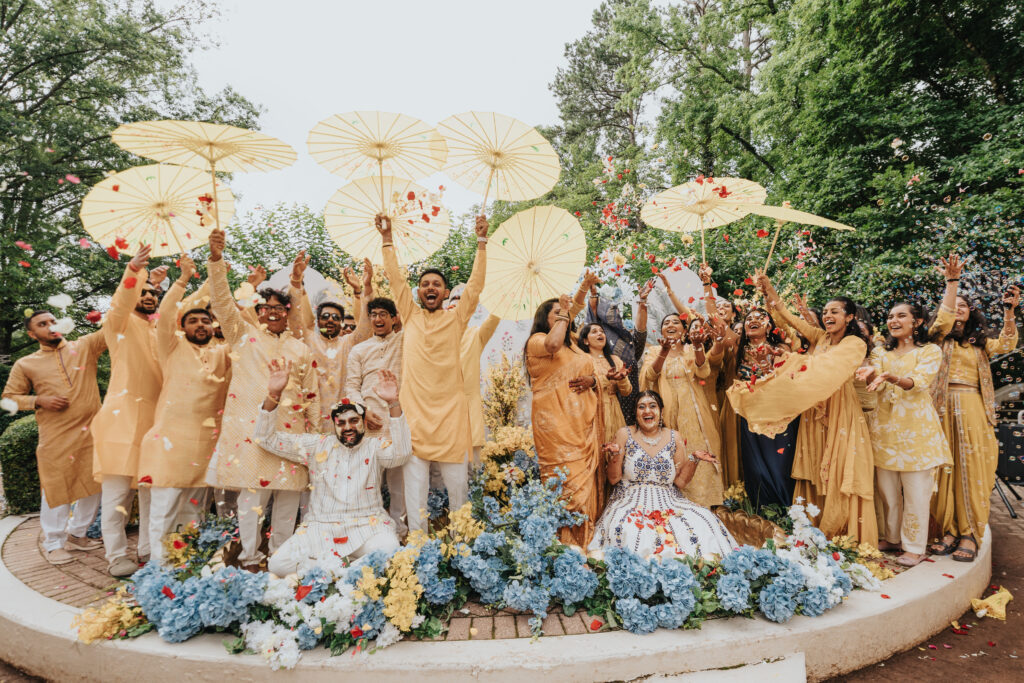
The decision mattered. The bride had chosen the venue specifically for its outdoor courtyard, and maintaining that choice preserved the emotional integrity of the event. Guests gathered beneath yellow parasols, visited the jewelry bar to accessorize, and experienced Haldi in a way that felt personal, modern, and culturally resonant.
A Ceremony in Ivory with Architectural Simplicity
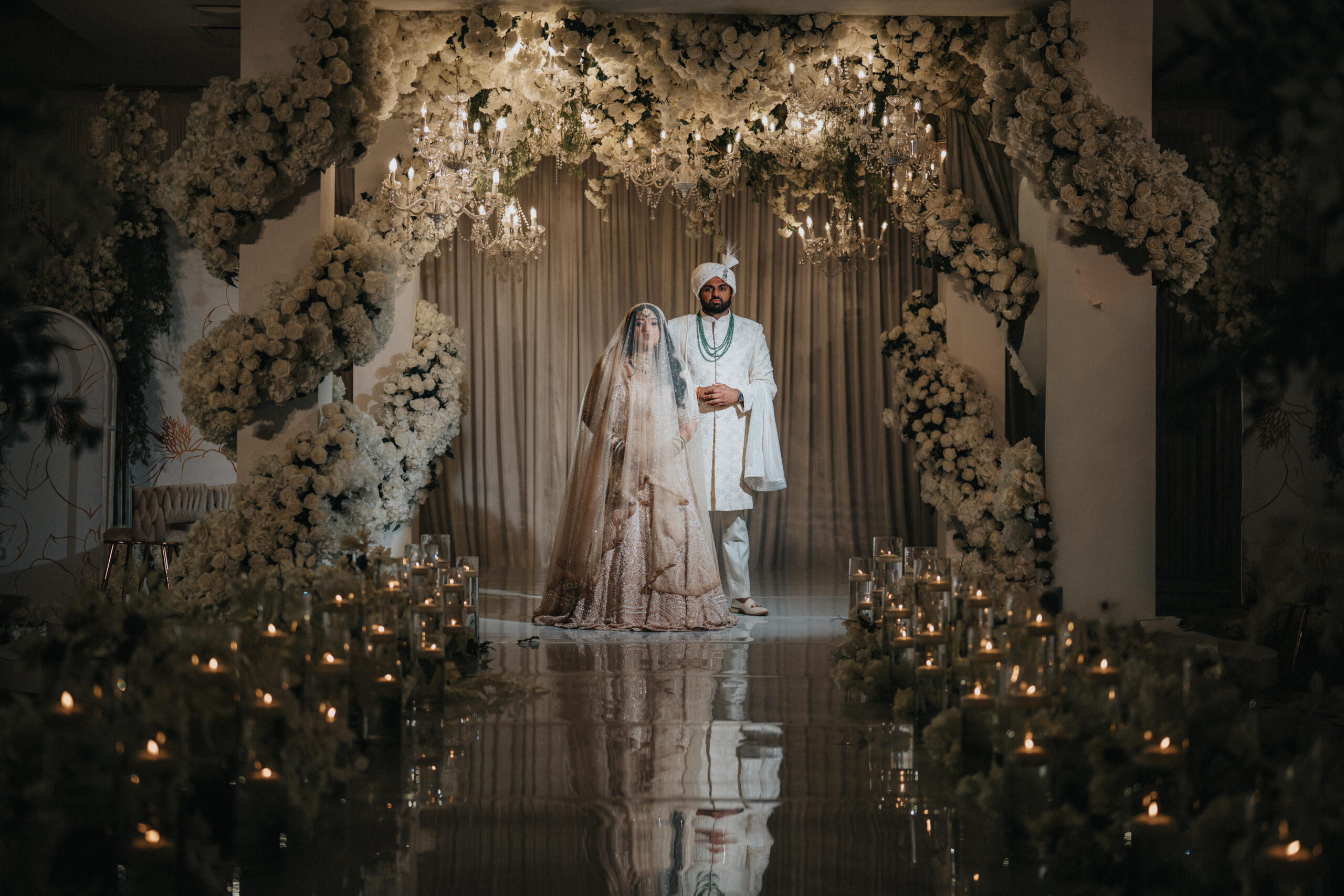
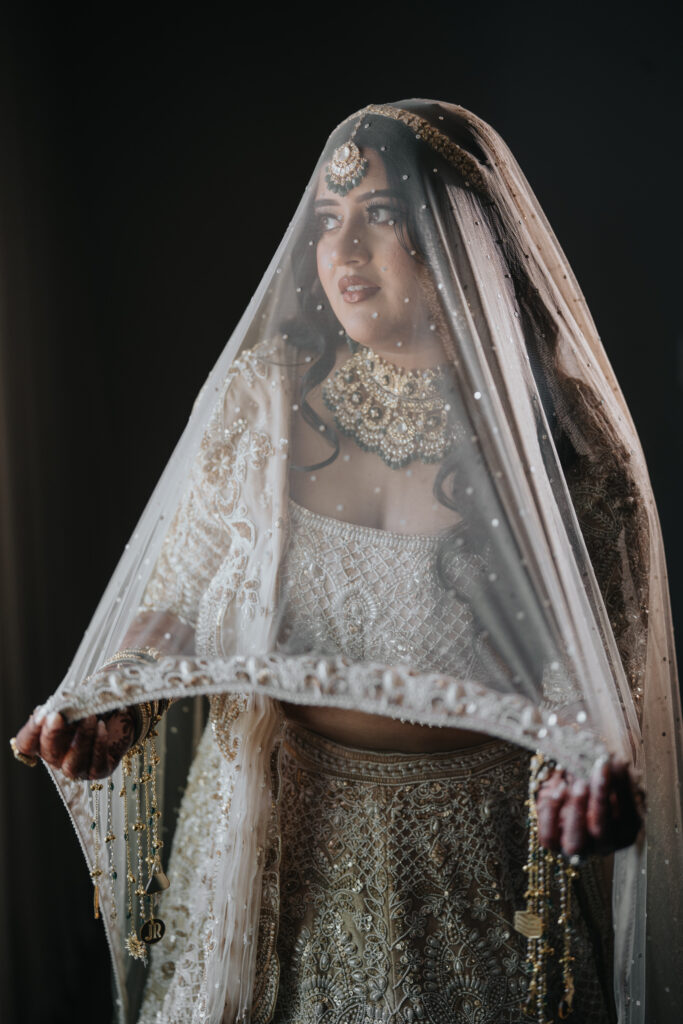
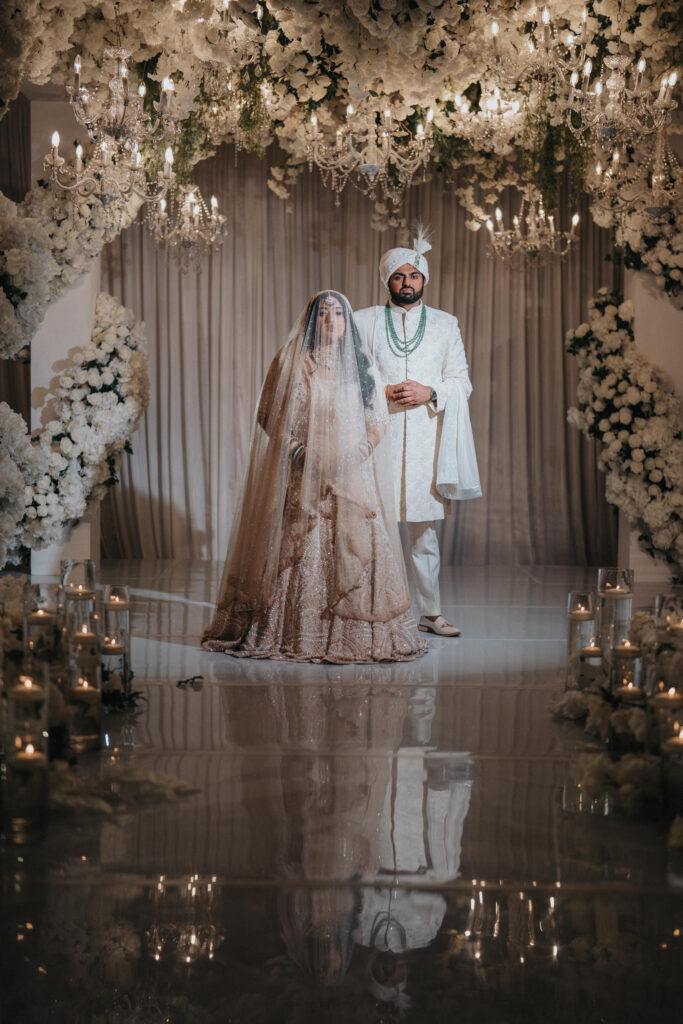
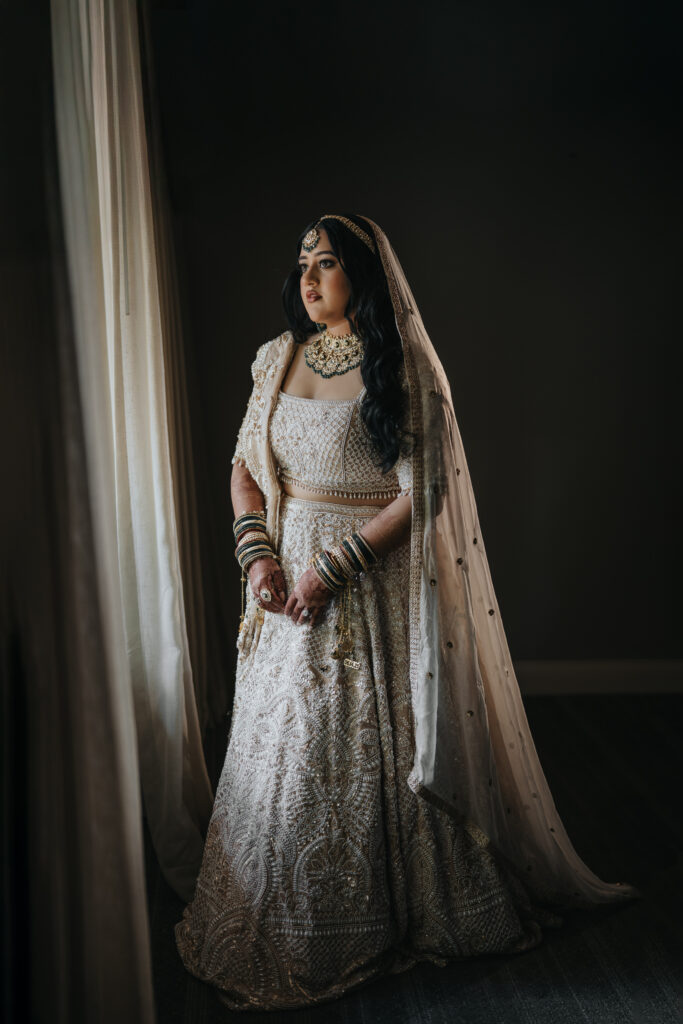
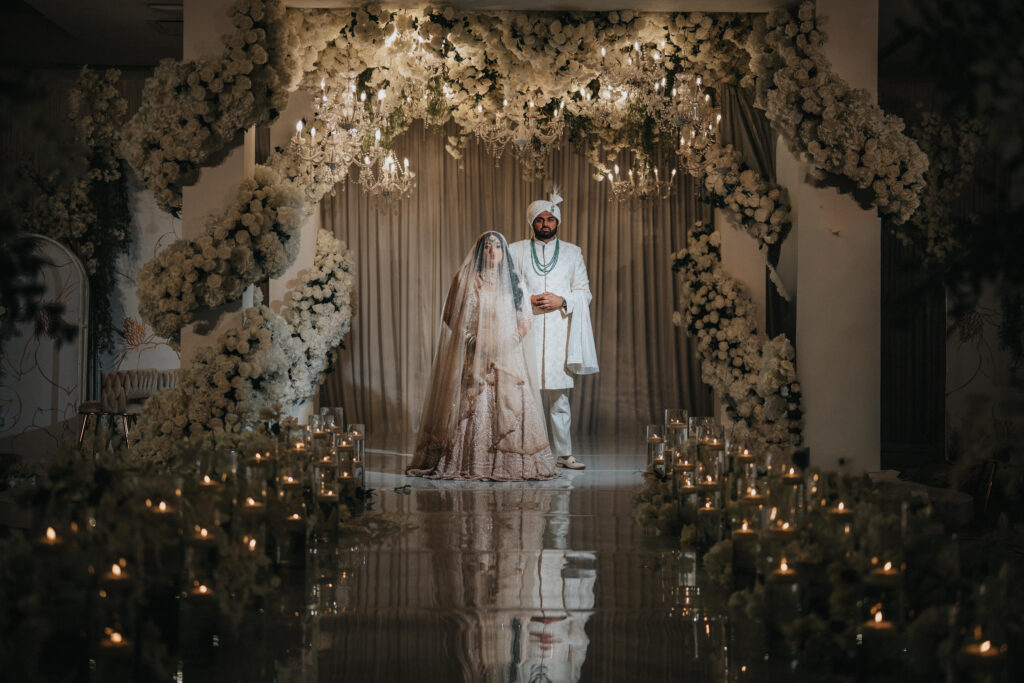
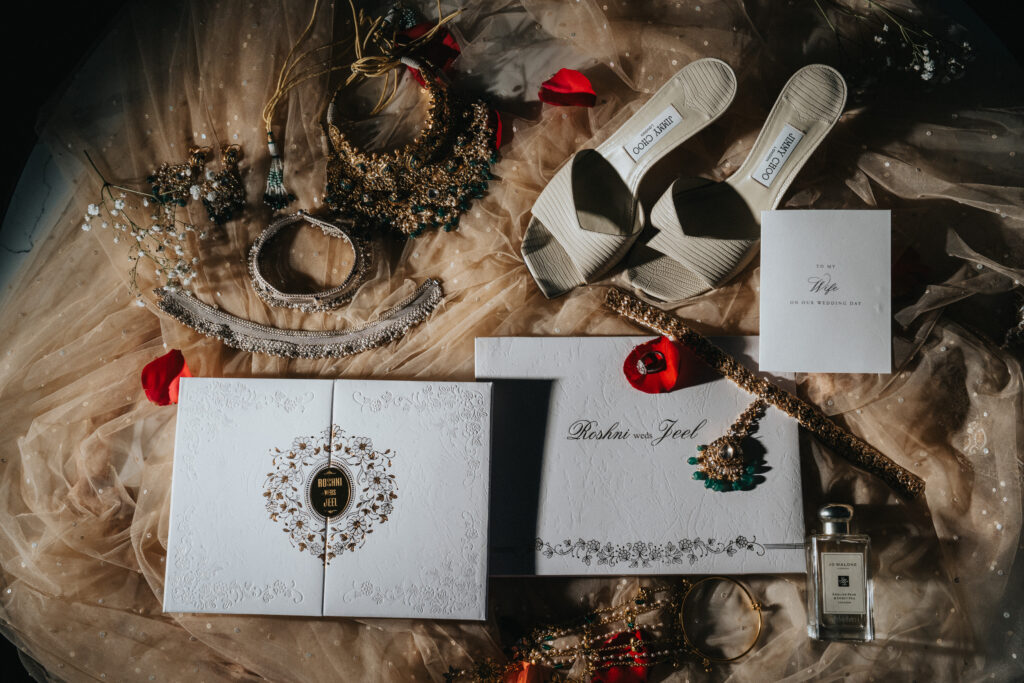
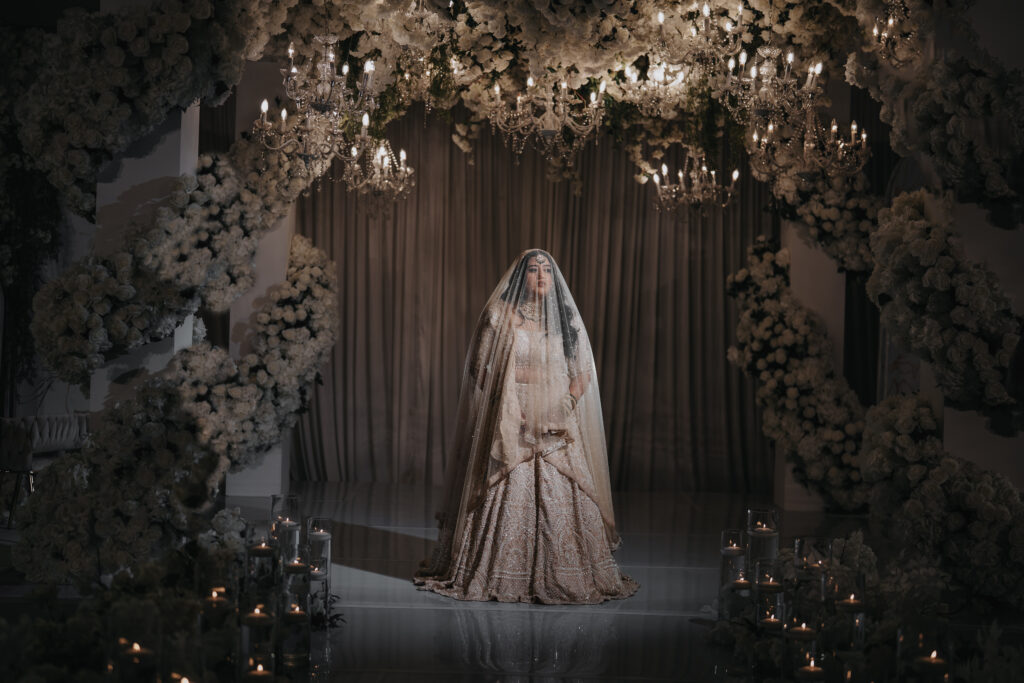
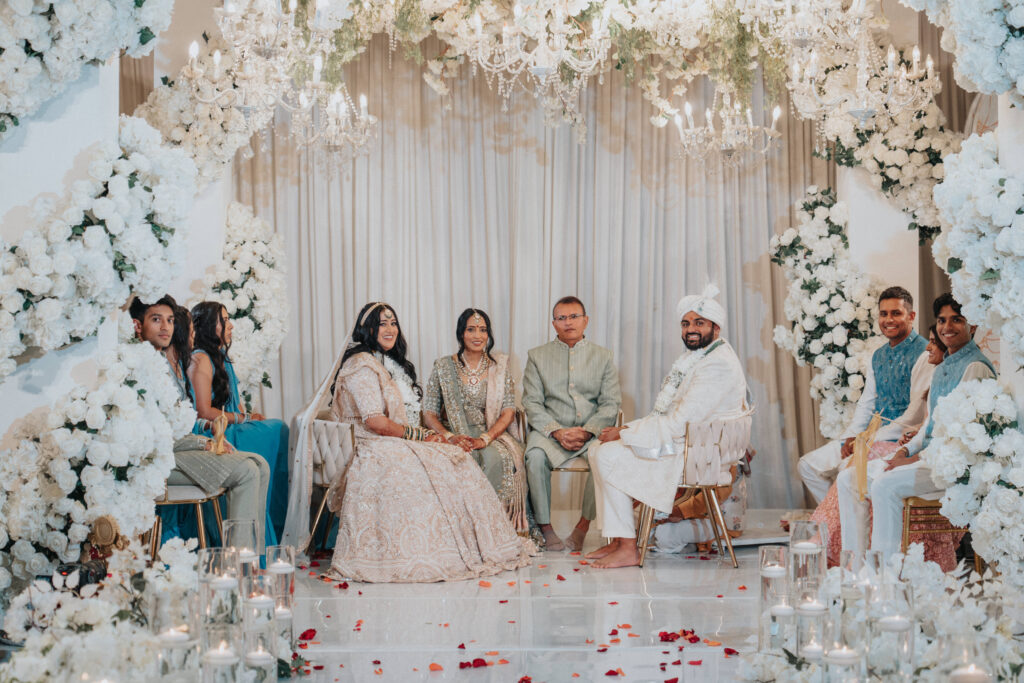
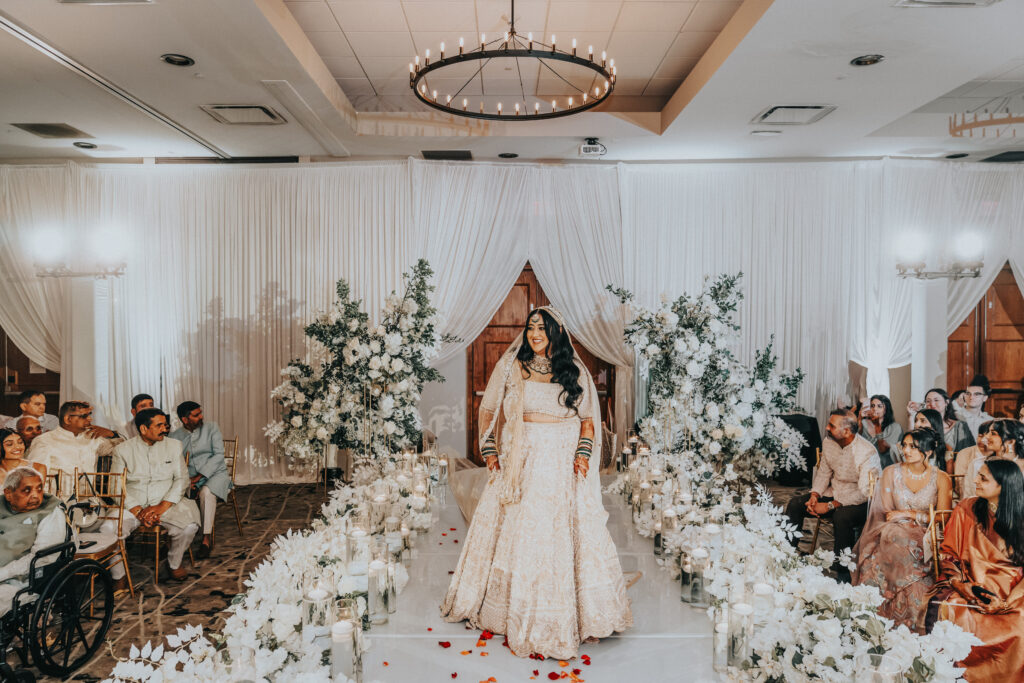
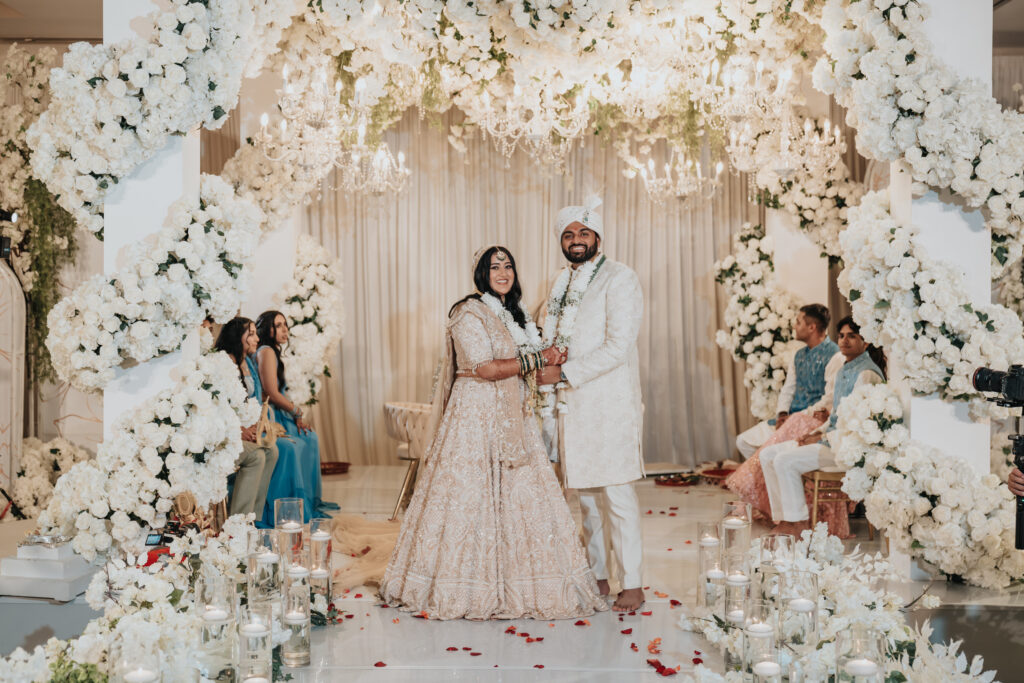
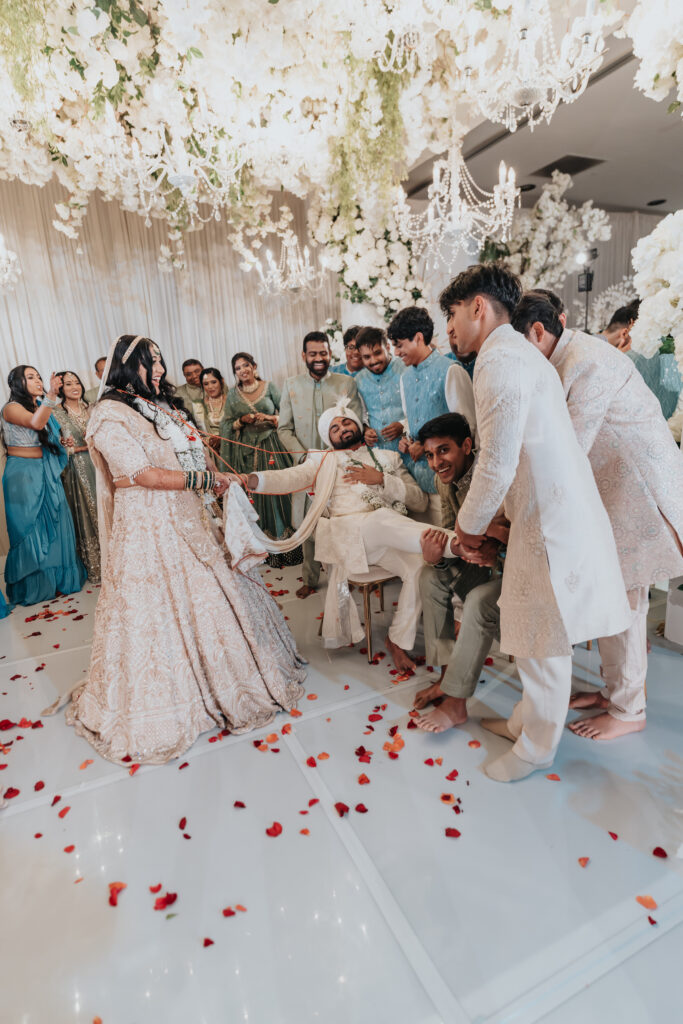
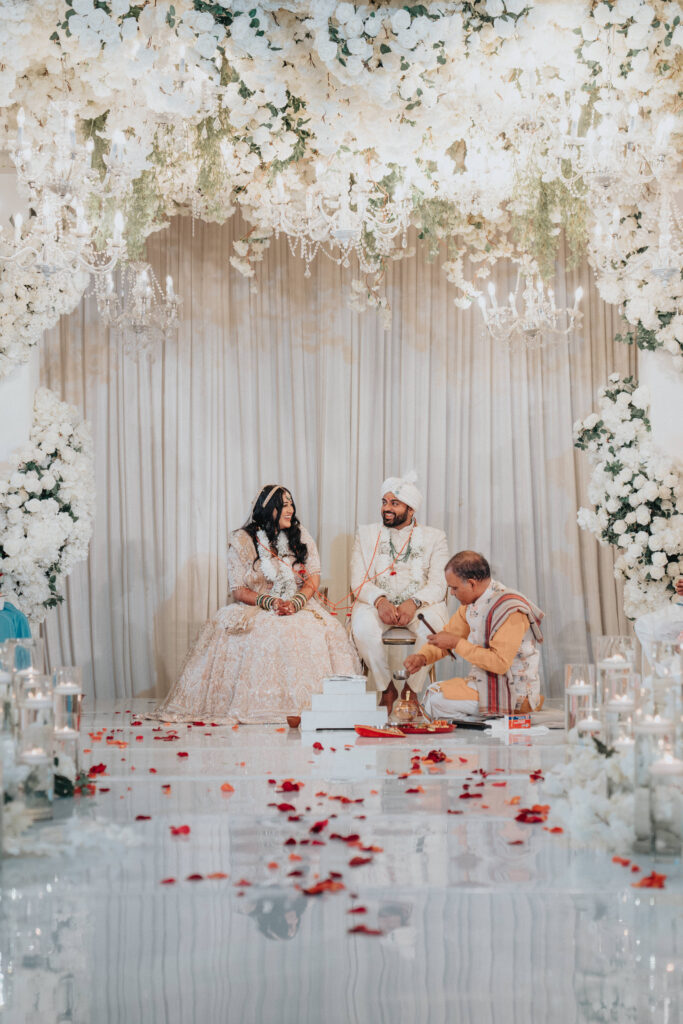
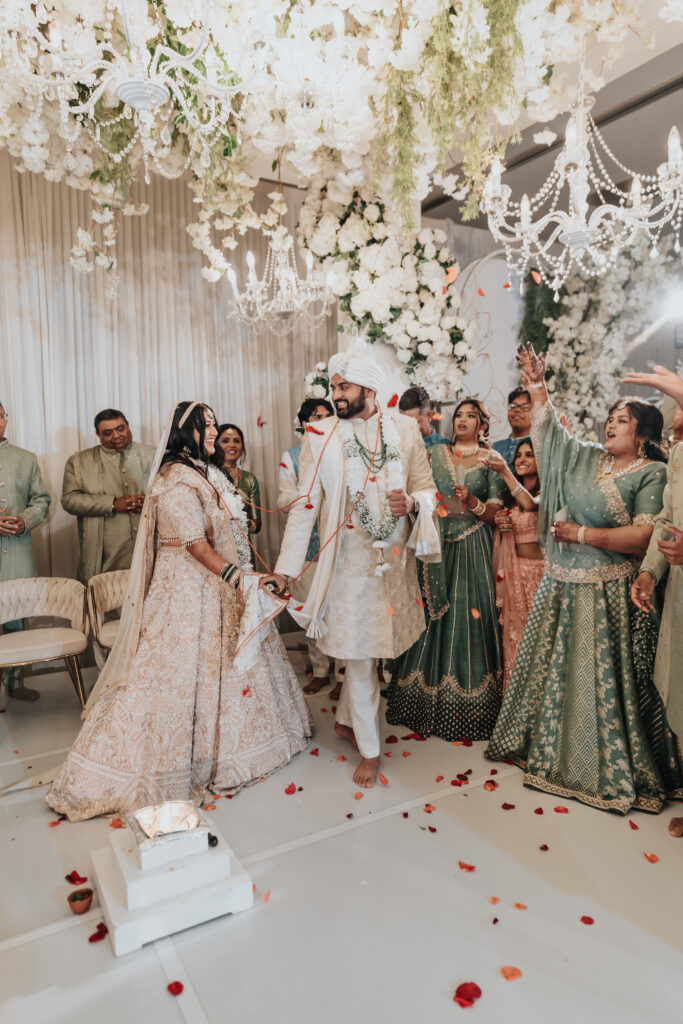
For the ceremony, the palette shifted entirely. Ivory and soft textures defined the mandap, creating a sense of calm and visual clarity. The design relied on architectural restraint, elegant enough to frame the rituals, quiet enough not to compete with them. During the pheras, guests rang bells in unison, adding an audible texture to the moment. The bride wore her mother’s wedding anklets, and the couple exchanged personalized vows before a joyful vidaai concluded the evening.
A Reception Transformed Through Structure and Scale
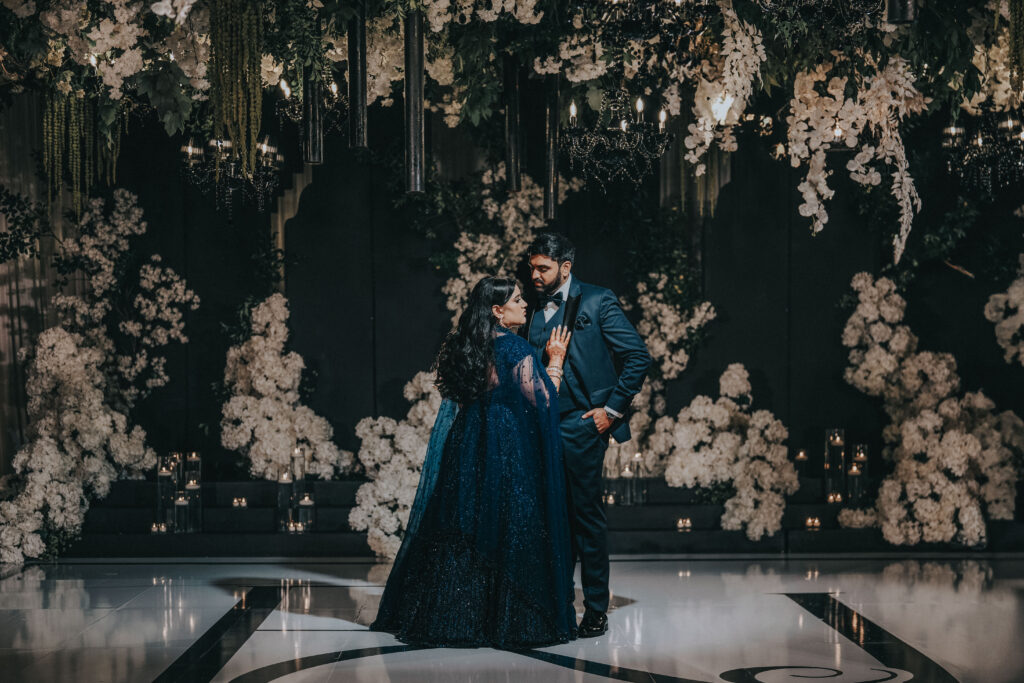
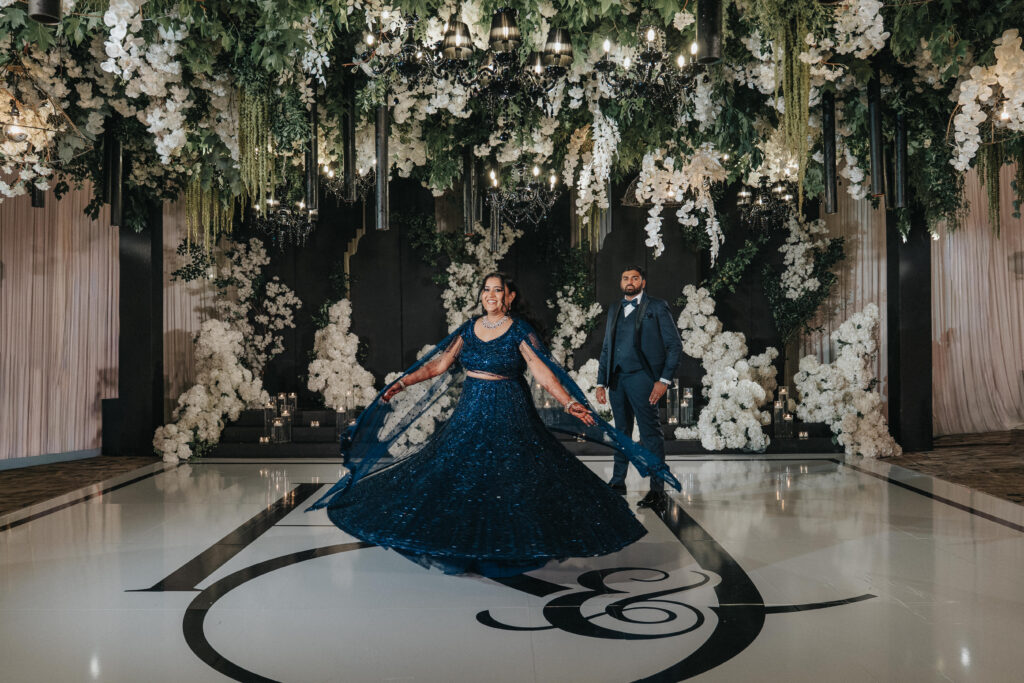
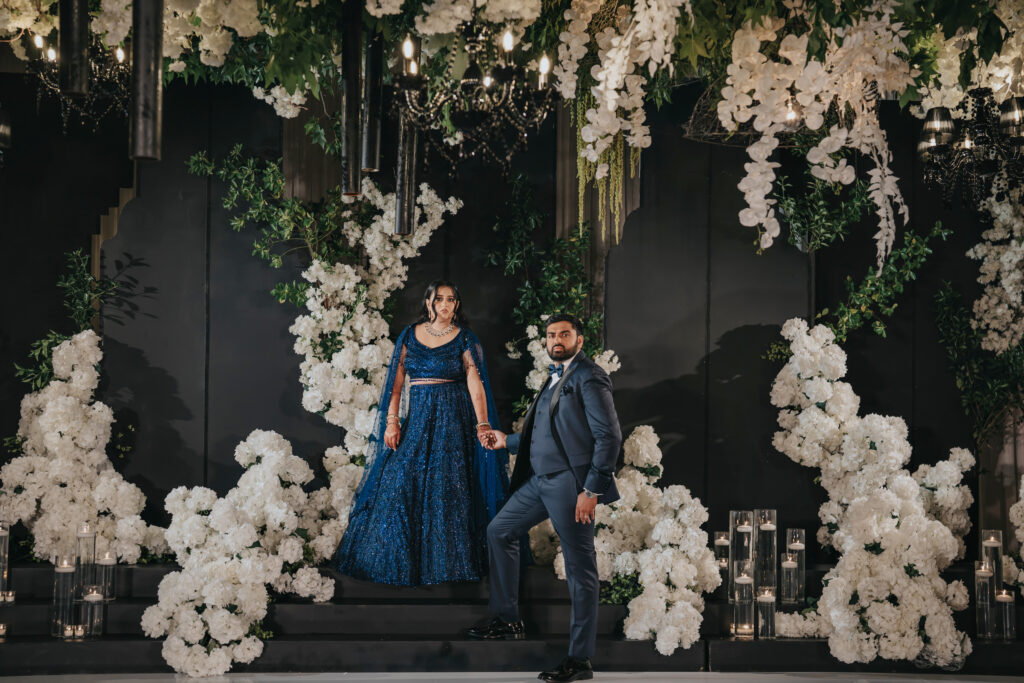
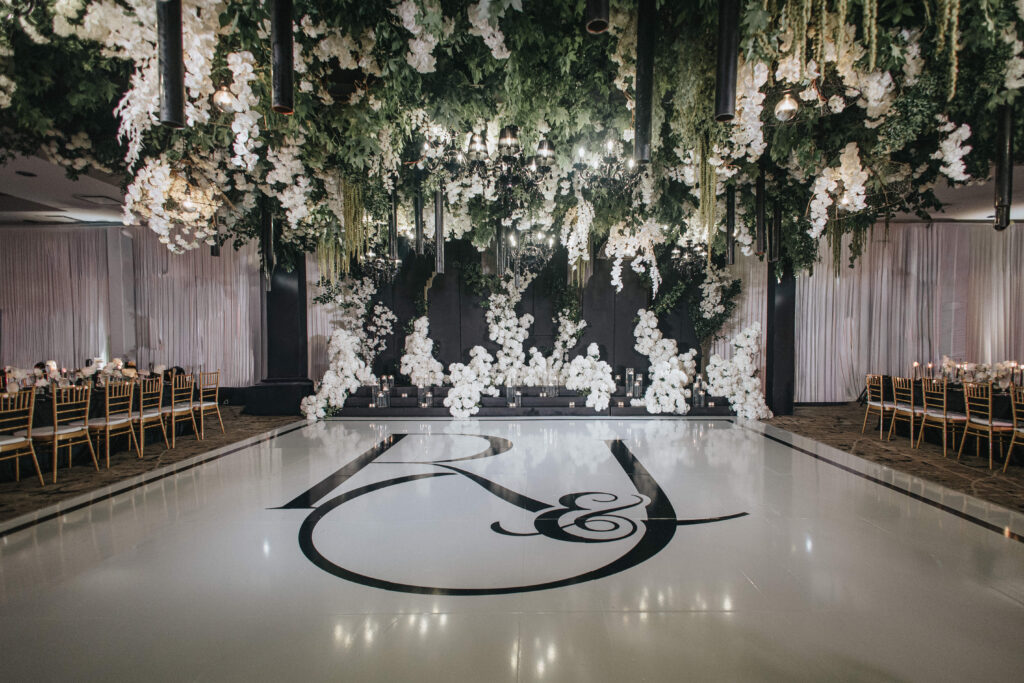
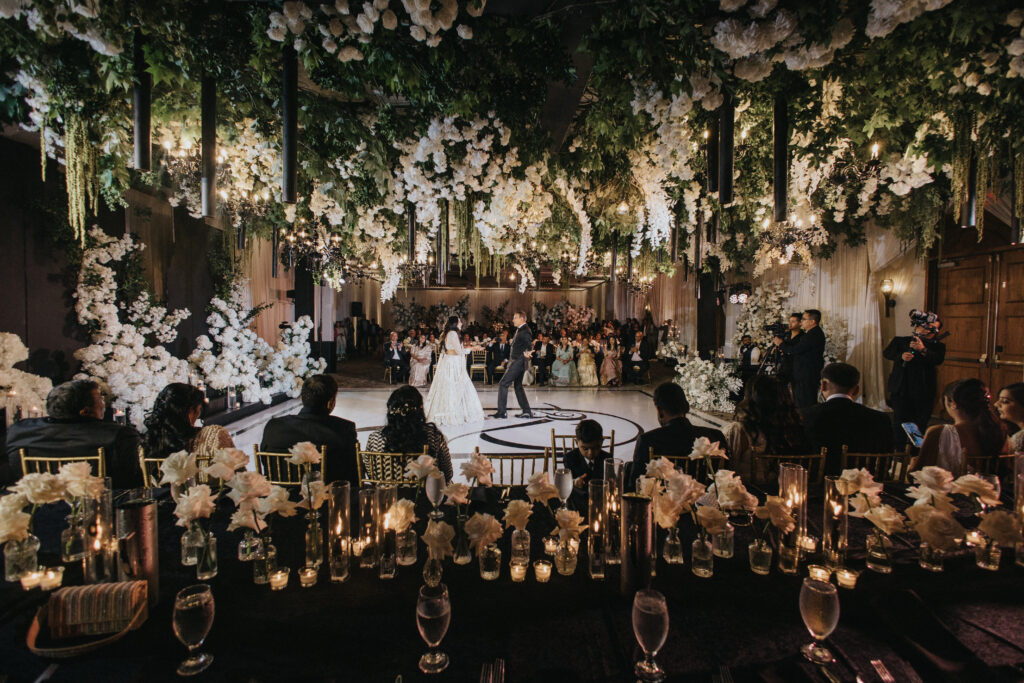
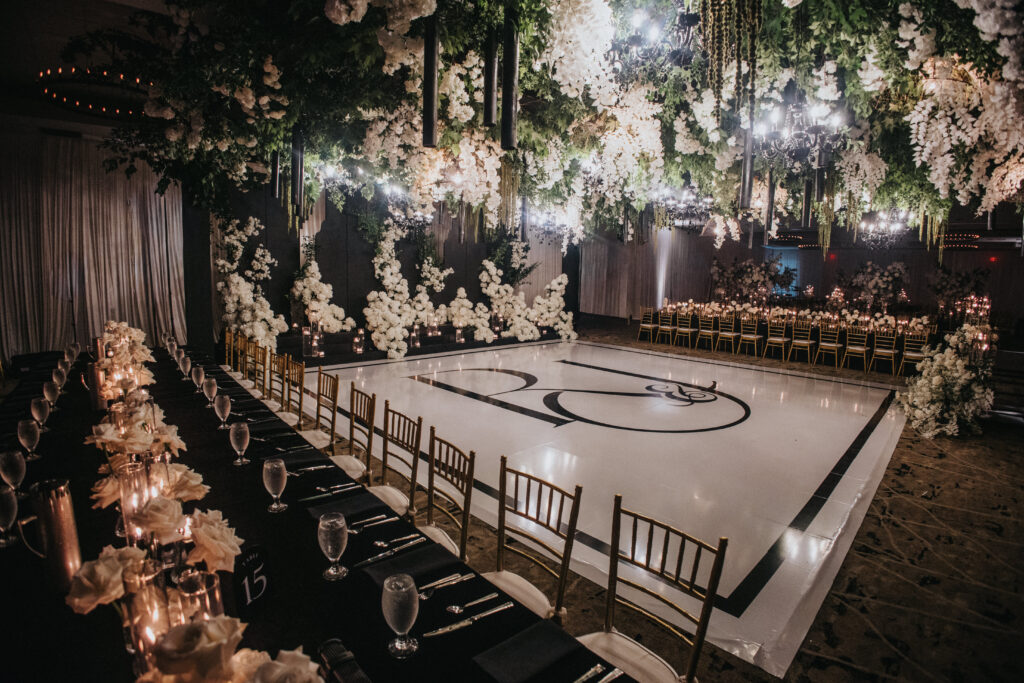
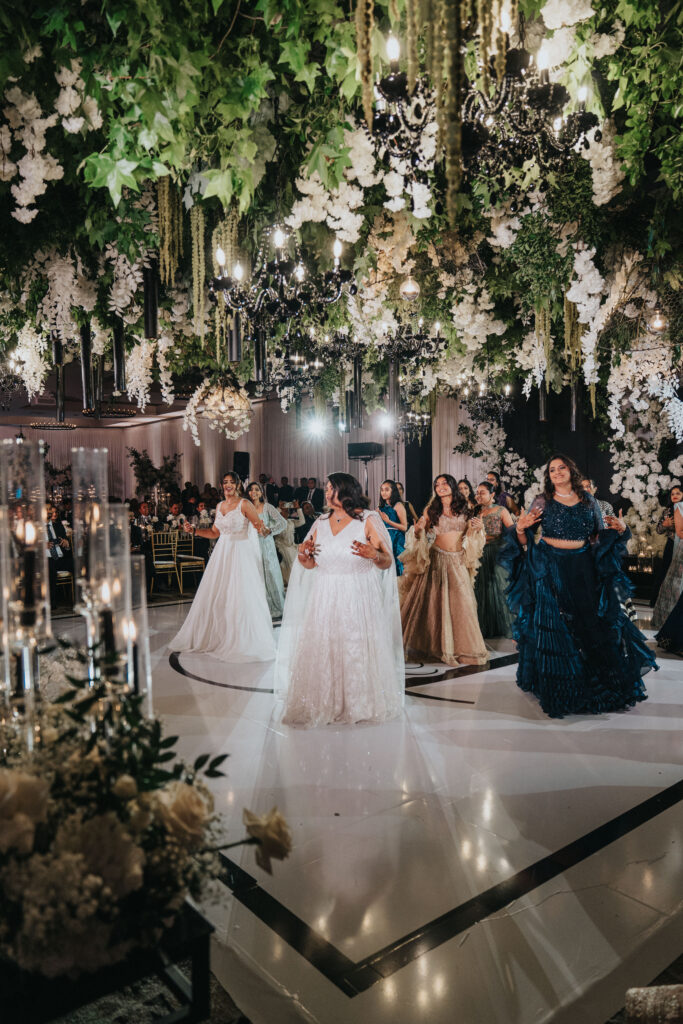
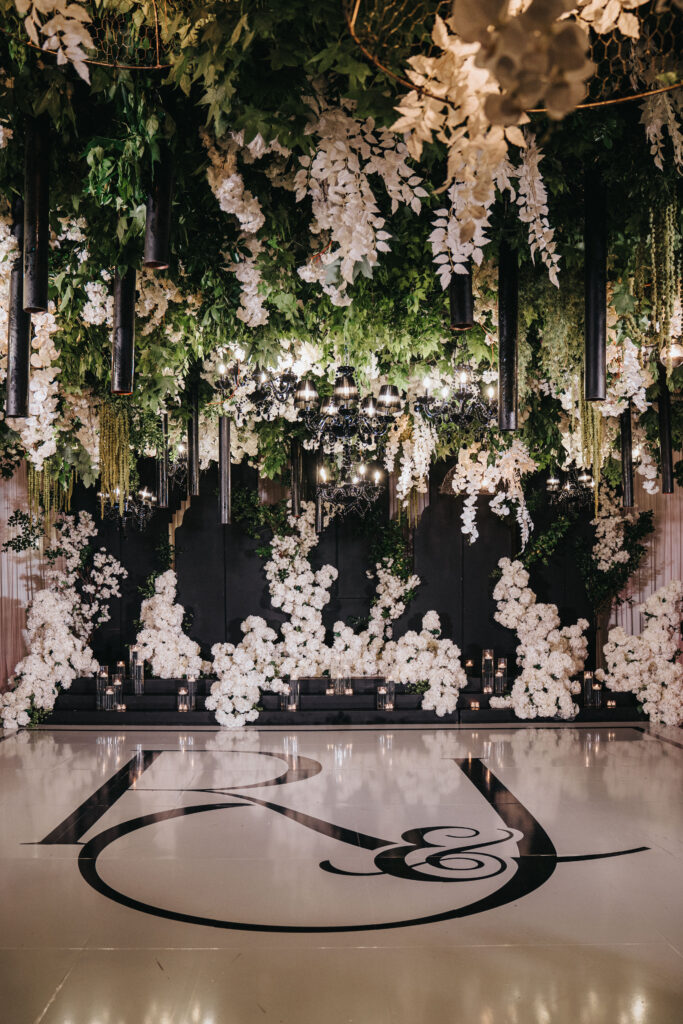
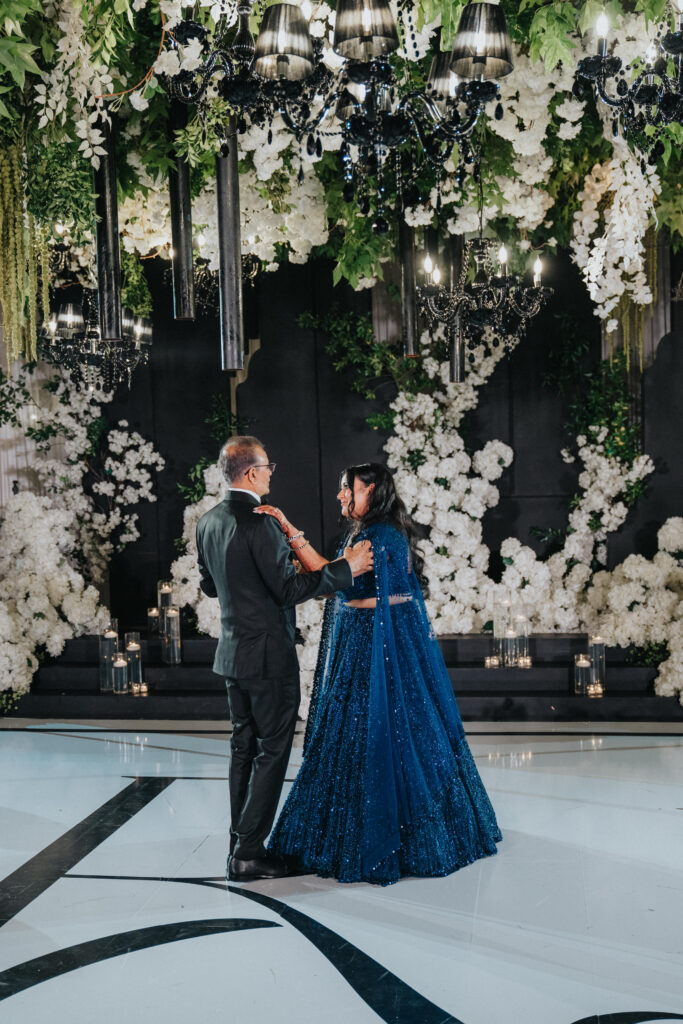
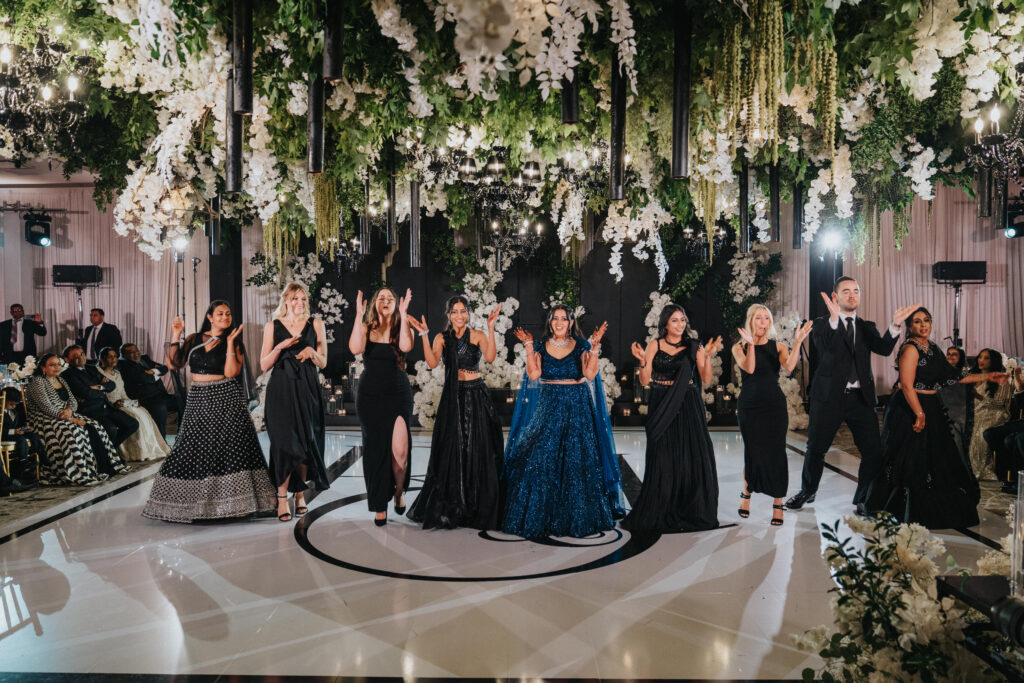
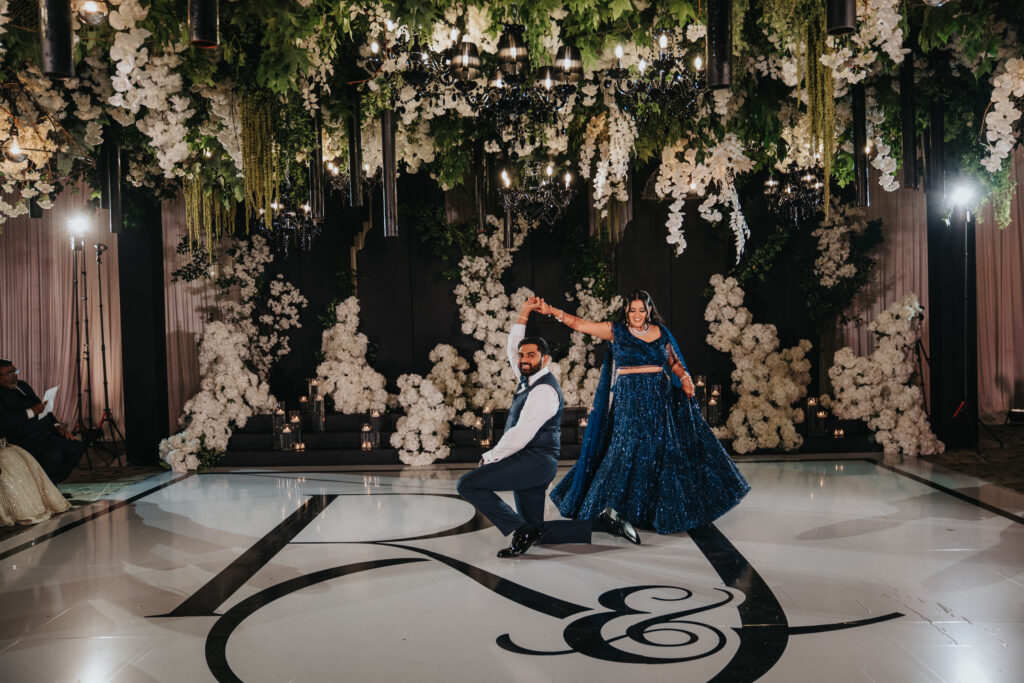
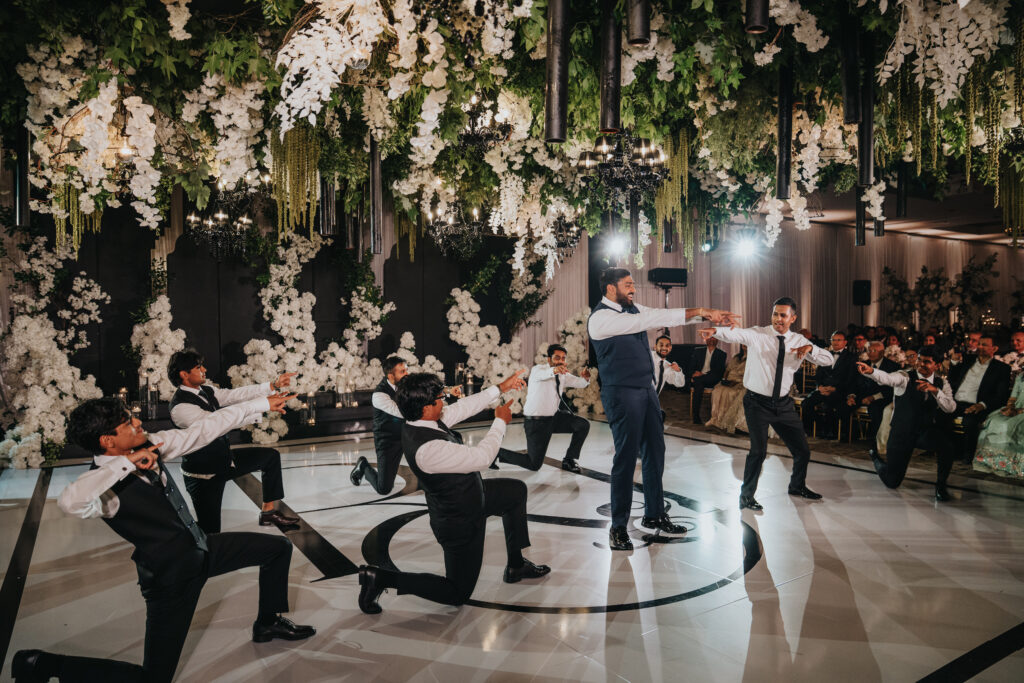
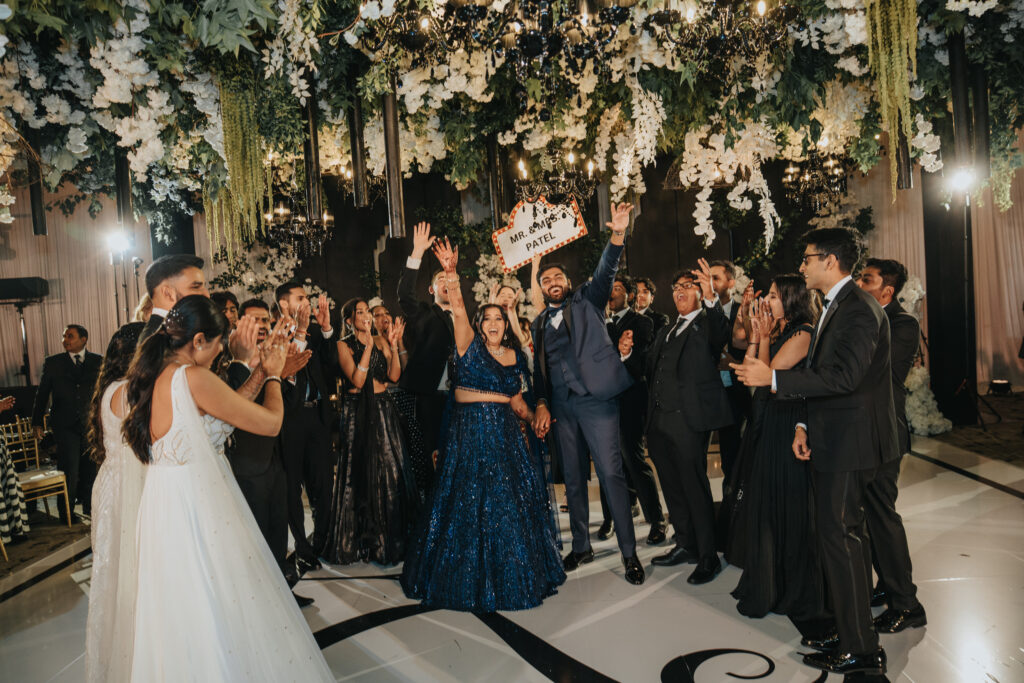
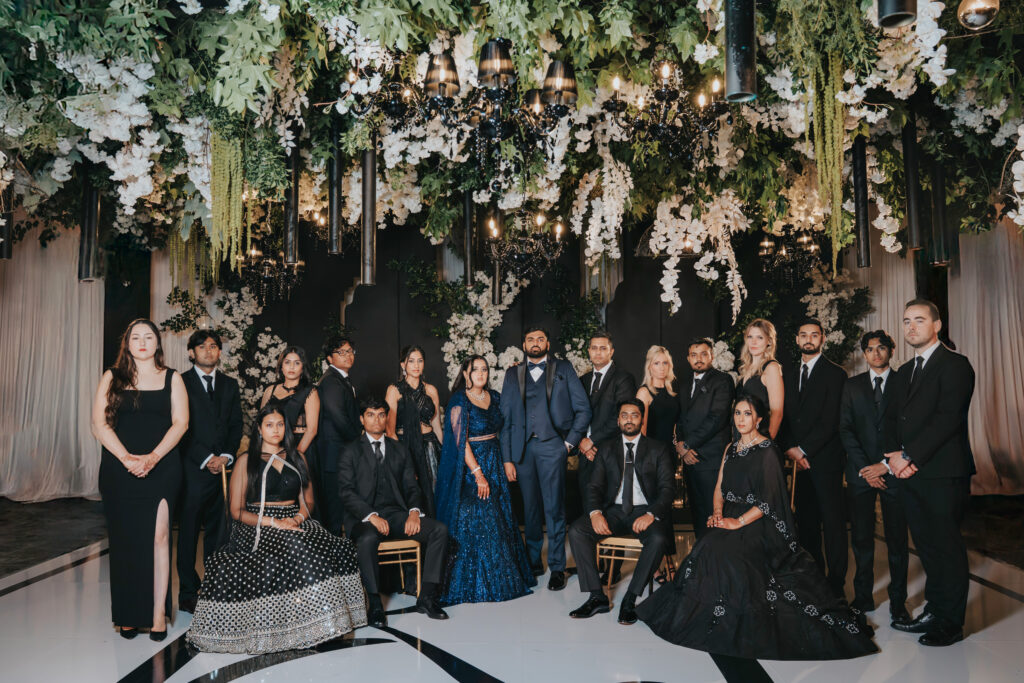
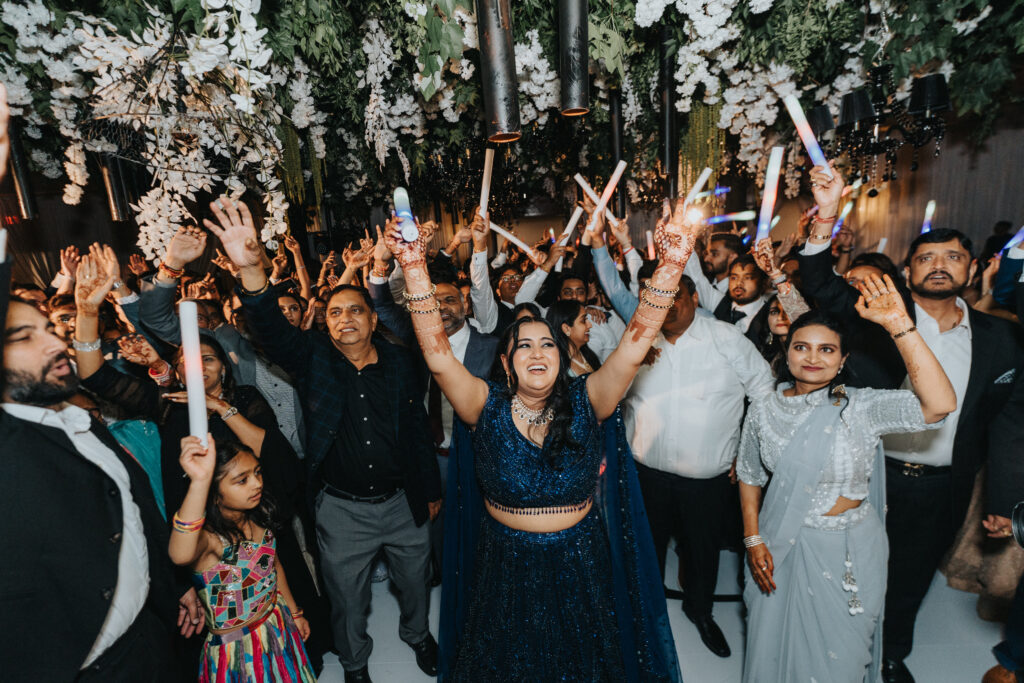
The reception was the boldest transformation of the weekend with a dramatic color palette, custom builds, and an ambitious install. We added a custom freestanding rigging structure that allowed us to suspend florals, lighting, and chandeliers without relying on the venue’s infrastructure. This addition changed the scale of the room and gave the room the visual presence it needed.
Spatially, the ballroom posed challenges. Clearances, load paths, and guest flow required multiple redesigns to accommodate estate tables, rounds, and bars while maintaining comfort for more than 400 guests. The final layout felt intentional rather than crowded, luxurious rather than maximal. All bars were positioned within the ballroom to support service flow, and the venue was fully draped in ivory to neutralize the architecture and allow the design to read cleanly. What had been an uninspiring space became something entirely different, proof that luxury often comes from thoughtful design rather than an inherently beautiful venue.
Personalization as the Highest Form of Luxury
While design set the tone, personal details created meaning. At the Haldi, yellow parasols offered shade and color, and a jewelry bar invited guests to accessorize for photos. We replaced flower girls with flower grandmas, and the bride shared a personalized voice message with her groom, her parents, and her guests moments before walking down the aisle. During the ceremony, the bride wore her mother’s wedding anklets, guests rang bells during the pheras, and the couple exchanged personal vows before a joyful vidaai. Even the seating chart carried meaning, with tables named after cities significant to their relationship. These touches turned the weekend into an experience rather than an itinerary.
The Future of Indian Weddings
As Indian weddings continue to evolve across the diaspora, couples are gravitating toward originality, curation, and storytelling. They are investing in planners who design as thoughtfully as they manage logistics, and who understand how to translate cultural tradition into contemporary environments. This wedding demonstrated that evolution in real time: five events, five distinct aesthetics, no repetition, and no compromise. It also underscored a truth about luxury: it is rarely about scale alone. It is about intention, how spaces feel, how guests move, and how a couple sees themselves reflected in the design.
This wedding represented the intersection of originality + logistics, the space RHS Events thrives in as both planner and creative director. Our clients come to us not for replicas or trend copies, but for experiences that feel curated, personal, and beautifully executed. Visit our contact page to start planning your dream wedding today. For more wedding inspiration, follow us on social media and explore our blog for more beautiful love stories and real wedding experiences.